How to Choose a Headphone Amplifier: Power, Gain and Output Impedance Explained
August 10, 2026
Choosing a headphone amplifier can be confusing when every product page seems to highlight different specifications. One amplifier may advertise several watts of output power, another may emphasize ultra-low output impedance, while others focus on multiple gain settings, balanced outputs, or extremely low noise.
The key is understanding that bigger numbers do not automatically mean a better match for your headphones.
When choosing a headphone amplifier, three specifications are particularly useful to understand: power, gain, and output impedance. Together with the impedance and sensitivity of your headphones, they can tell you much more about whether an amplifier is suitable for your system.
This guide explains what these specifications mean and how to use them when comparing headphone amplifiers.
1. Start With Your Headphones
Before comparing amplifiers, check two specifications of your headphones:
- Impedance, measured in ohms (Ω)
- Sensitivity, usually expressed as dB SPL/mW or dB SPL/V
These specifications describe different things. Impedance represents the electrical load presented to the amplifier, while sensitivity indicates how efficiently the headphones convert electrical input into acoustic output.
This is why impedance alone does not tell you how difficult a headphone is to drive.
A 32Ω headphone with relatively low sensitivity may require substantial power, while a higher-impedance headphone with sufficient sensitivity may require less power than expected, although it can demand greater voltage from the amplifier.
When evaluating an amplifier, always consider impedance and sensitivity together.
2. Power: Don't Look at Watts Alone
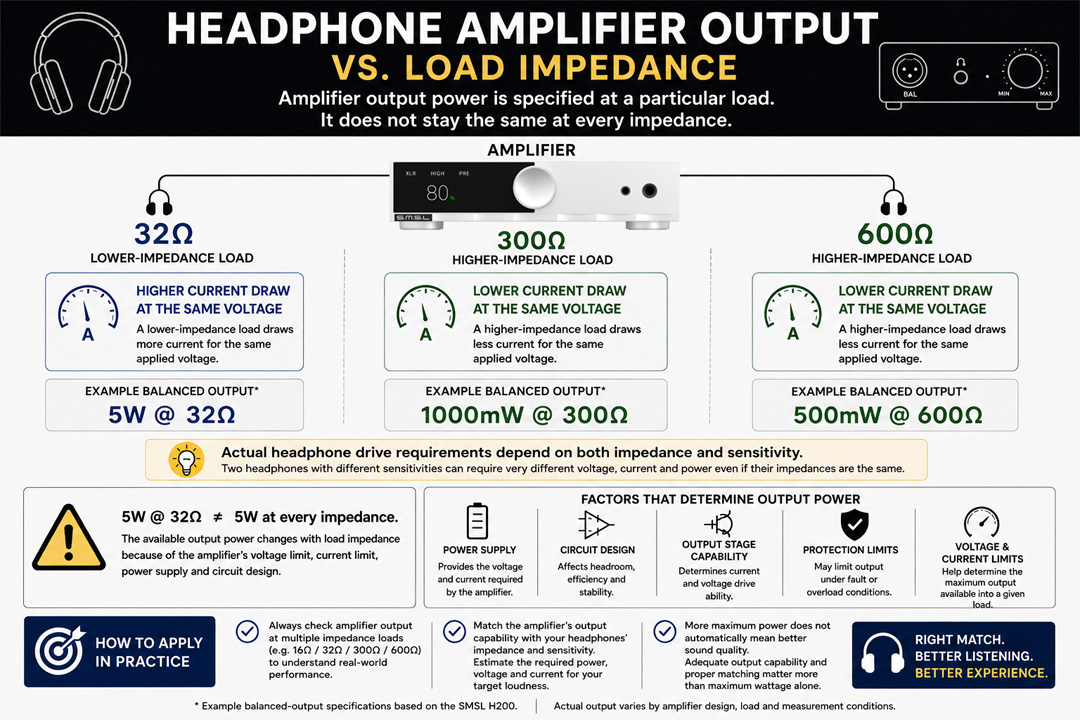
Headphone amplifier output is normally specified in milliwatts (mW) or watts (W) at a particular load.
For example: 5W @ 32Ω.
The important part is not only 5W, but also @ 32Ω.
An amplifier does not necessarily deliver the same maximum power into headphones with different impedances. Its available voltage and current, power supply, and output-stage design all influence how much power it can provide into a particular load.
This is why a specification showing output at several impedances is much more informative:
| Headphone Load | Amplifier Output |
|---|---|
| 16Ω | X W |
| 32Ω | X W |
| 300Ω | X mW |
| 600Ω | X mW |
For lower-impedance headphones, current capability can become important. Higher-impedance headphones generally require greater voltage swing to achieve higher output levels.
Once an amplifier can provide enough clean output to reach the desired listening level without clipping, additional unused power does not automatically produce better detail, soundstage, frequency response, or resolution.
Maximum power is primarily a measure of output capability, not sound quality. This is especially important with sensitive IEMs, which may require only a small fraction of the maximum output available from a powerful desktop amplifier.
3. Gain: More Gain Does Not Mean More Power
Gain and power are often confused, but they describe different things.
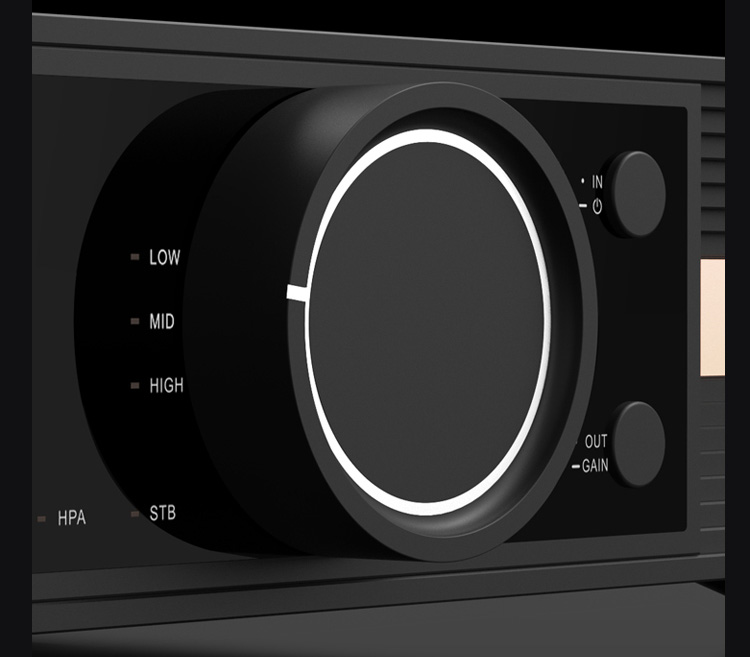
Gain determines how much the amplifier increases the level of the input signal.
High Gain does not automatically mean that the amplifier becomes fundamentally more powerful. Instead, it allows a smaller input signal to reach a higher output voltage—and potentially reach the amplifier's maximum output sooner.
This is why the best gain setting is not necessarily the highest one.
Use the lowest gain setting that provides sufficient listening volume and headroom.
Why Low Gain Matters for IEMs
Sensitive IEMs can become loud with very little voltage or power. Using excessive gain may leave only a small usable portion of the volume-control range.
- Low gain availability
- Low output noise
- Precise volume adjustment
- Good channel matching
- Low output impedance
For harder-to-drive headphones, higher gain can be useful when additional voltage gain is needed to reach the desired listening level.
4. Output Impedance: Why Lower Usually Helps
The output impedance of the amplifier should not be confused with the impedance of the headphones.
Headphone impedance describes the load connected to the amplifier. Amplifier output impedance describes the effective source impedance at the headphone output.
For most modern solid-state headphone amplifiers, a low output impedance is generally desirable because it reduces electrical interaction between the amplifier and headphones.
This matters because headphone impedance may change with frequency. If the amplifier's output impedance is relatively high, that interaction can alter the voltage delivered to the headphones at different frequencies and potentially affect frequency response.
A commonly referenced guideline suggests keeping amplifier output impedance below approximately one-eighth of the headphone's nominal impedance. For example, for 32Ω headphones, below approximately 4Ω is a useful general guideline. It is not an absolute rule, because the actual effect depends on the headphone's impedance curve and design.
5. Balanced vs. Unbalanced: Is Balanced Always Better?
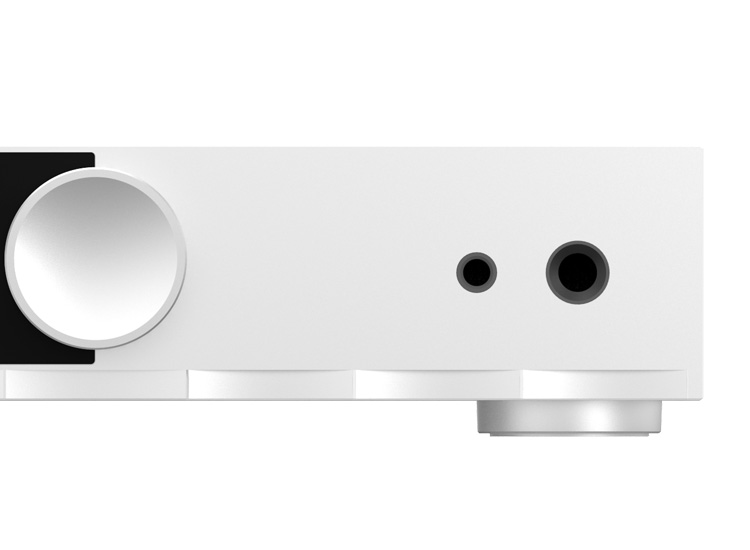
Many modern headphone amplifiers provide both balanced and unbalanced headphone outputs.
A common misconception is that balanced output automatically sounds better. That is not necessarily true.
Depending on the amplifier's circuit architecture, the balanced output may provide greater voltage swing and therefore higher maximum output power than the unbalanced output. But that advantage comes from the amplifier design, not simply because the connector is balanced.
A 4.4mm or 4-pin XLR output does not automatically guarantee better frequency response, lower distortion, greater detail, or better overall sound quality.
If your headphones benefit from the additional output capability available through the balanced connection, it can be useful. If the unbalanced output already provides sufficient clean output, balanced operation should not automatically be considered an upgrade.
6. Don't Ignore Noise and Volume Control
Maximum output power attracts attention, but it tells only part of the story.
For sensitive headphones and especially IEMs, the amplifier's noise performance can become just as important.
A high signal-to-noise ratio (SNR) generally indicates that noise is low relative to the reference signal used in the measurement. However, SNR figures should always be considered together with the manufacturer's measurement conditions.
The practical listening result can also depend on headphone/IEM sensitivity, selected gain, source output level, amplifier output noise, and volume-control implementation.
This is why features such as low gain and precise volume control can be valuable even on an amplifier capable of delivering several watts.
7. Reading Real Headphone Amplifier Specifications
SMSL H200
The H200 is specified with:
- Up to 5W @ 32Ω balanced output
- 1000mW @ 300Ω
- 500mW @ 600Ω
- Three gain levels
- Near 0Ω output impedance
- 131dB SNR
Instead of focusing only on the 5W figure, these specifications show how the amplifier is designed to work across different loads. Multiple gain settings provide flexibility when moving between sensitive and demanding headphones, while near-zero output impedance reduces interaction with different headphone loads.

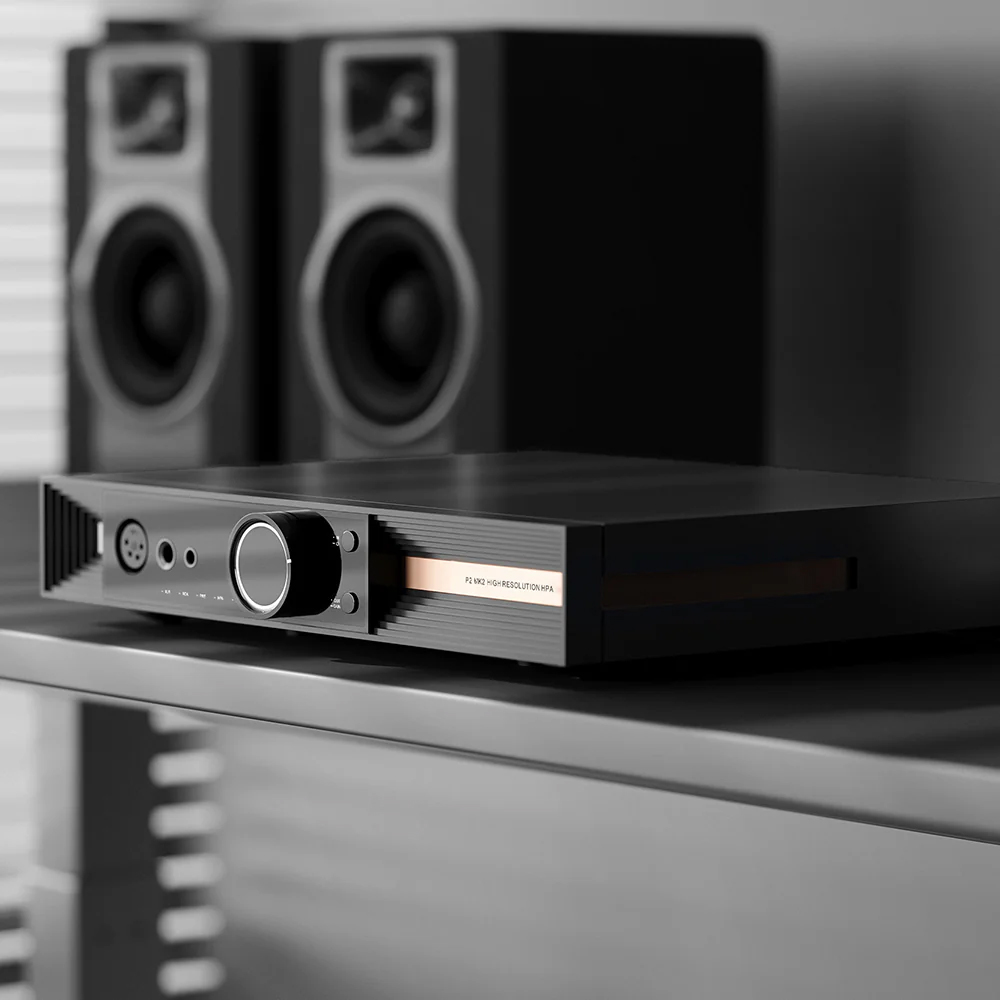
VMV P2 MK2
The VMV P2 MK2 provides another useful example. Its balanced headphone output is rated at:
| Load | Balanced Output |
|---|---|
| 16Ω | 14W × 2 |
| 32Ω | 8W × 2 |
| 300Ω | 1W × 2 |
| 600Ω | 500mW × 2 |
Then check whether the amplifier provides the inputs, outputs, preamplifier functionality, and connectivity your system requires.
The best headphone amplifier is not necessarily the one with the highest output power. It is the one that provides the right combination of output capability, gain structure, noise performance, output impedance, and connectivity for your headphones and system.
Final Thoughts
Understanding headphone amplifier specifications becomes much easier once power, gain, and output impedance are treated as separate characteristics.
Power describes how much electrical output an amplifier can provide into a specified load. Gain determines how strongly the input signal is amplified. Output impedance influences how the amplifier electrically interacts with the connected headphones.
None of these numbers should be considered in isolation.
A powerful amplifier may be useful for demanding headphones, while sensitive IEMs can place greater importance on low noise, low gain, and precise volume control. Balanced output may provide additional output capability in some amplifier designs, but it should not automatically be treated as superior.
Start with the impedance and sensitivity of your headphones, then evaluate the amplifier specifications that matter for that particular load and use case. That approach will tell you far more than simply choosing the amplifier with the biggest wattage number.